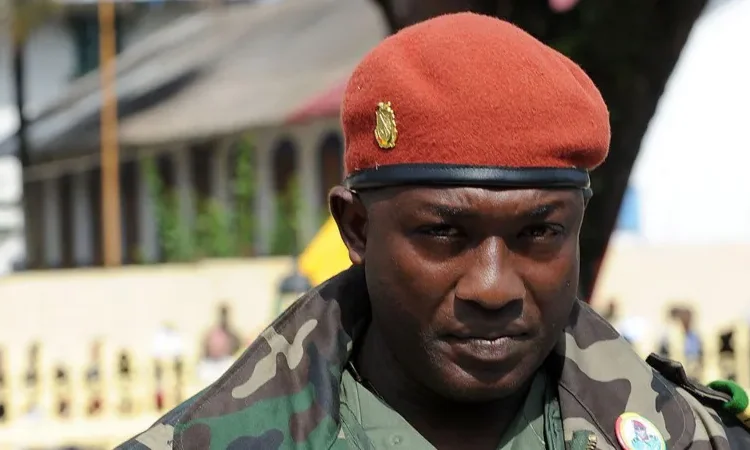
Aboubacar Sidiki Diakité, also known as Toumba, has died in custody, authorities confirmed on Wednesday. Diakité, a key figure in the 2009 Conakry stadium massacre, was serving a 10-year sentence for his role in the attack that killed over 150 protesters and left at least 109 women raped.
The prison administration reported that Diakité was taken to the Samory Touré Military Hospital late on Monday and succumbed to a medical emergency characterised by gastric swelling, abdominal pain, and constipation.
At the time of the massacre, Diakité was commander of the presidential guard and a close ally of Guinea’s then-military ruler, Moussa Dadis Camara. Following the violence, Diakité fled the country and was arrested in Senegal in 2016 under an assumed identity before being extradited to Guinea in 2017.
Despite his incarceration, Diakité remained politically active, attempting to form a political party and run for president in 2025, though the Supreme Court of Guinea ruled him ineligible.
The 2009 massacre occurred on 28 September, when tens of thousands of citizens gathered at a stadium in Conakry to protest against Camara’s potential presidential bid. On Camara’s orders, security forces opened fire on the crowd, resulting in mass casualties and injuries. Judicial proceedings later confirmed Diakité’s involvement in orchestrating the atrocities.
His death has reignited debates in Guinea over accountability and reconciliation. One political expert told the BBC that while Diakité has died, “the full truth died with him,” highlighting lingering frustrations over incomplete justice.
Guinea’s recent history has been marked by instability, including military coups, contested elections, and violent crackdowns on dissent. While the country returned to civilian rule, efforts to address past abuses have been slow and divisive. Former ruler Camara, sentenced to 20 years in prison for crimes against humanity, was pardoned in March last year by current leader Mamady Doumbouya.
Diakité’s passing underscores the unresolved tensions in Guinea’s political landscape and raises fresh questions about the legacy of accountability for one of the darkest chapters in the country’s recent history.