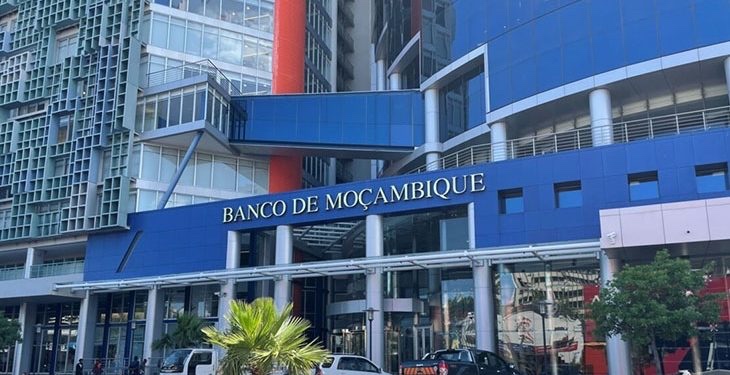
Banco de Moçambique has halted its record streak of interest rate cuts, maintaining its benchmark rate at 9.25 per cent as concerns over rising government debt and global geopolitical tensions weigh on the country’s inflation outlook.
Governor Rogerio Zandamela announced the decision in Maputo, marking the first policy meeting since November 2023 where rates were not reduced, following a steady decline from 17.25 per cent.
According to Bloomberg, the move reflects growing caution among policymakers as inflationary risks persist both domestically and internationally.
The central bank cited concerns that prolonged geopolitical tensions, particularly linked to the Middle East conflict, could push up global energy prices and strain Mozambique’s external accounts.
Domestically, the economy continues to face multiple challenges, including post-election unrest, severe flooding—the worst in at least 25 years—and the closure of a major aluminium plant responsible for about one-fifth of export earnings.
Rising costs of imported fuel and fertiliser are also expected to increase pressure on local prices, further complicating the inflation outlook.
Governor Zandamela said the decision to hold rates reflects a cautious strategy aimed at preserving macroeconomic stability amid uncertain conditions.
Despite these risks, annual inflation in Mozambique has remained below five per cent since the end of 2023. However, early signs of rising prices have prompted policymakers to adopt a more measured approach.
The International Monetary Fund had earlier advised the government to allow greater exchange rate flexibility, signalling concerns about potential currency pressures.
Mozambique’s decision contrasts with varying monetary policy directions across Africa. The Bank of Uganda maintained its benchmark rate at 9.75 per cent in February, while the Bank of Zambia cut its rate to 13.5 per cent to support economic recovery.
Similarly, the Central Bank of Nigeria reduced its Monetary Policy Rate to 26.5 per cent, reflecting easing inflationary pressures in Nigeria.
In South Africa, annual consumer inflation slowed to three per cent in February 2026, aligning with the central bank’s target and indicating improving price stability.
Analysts say the differing approaches highlight how African economies are navigating unique domestic challenges while responding to global shocks, particularly rising energy costs linked to ongoing geopolitical tensions.
Mozambique’s move underscores the delicate balance policymakers must maintain between supporting economic recovery and containing inflation in an increasingly uncertain global environment.