Artificial intelligence (AI) is moving rapidly from concept to deployment across Africa. Global tech giants are expanding compute capacity, governments are investing in digital connectivity, and regional initiatives are laying the groundwork for data-driven economies. From hyperscalers such as Nvidia and Amazon to fibre-optic projects in Nigeria and data infrastructure developments in Kenya, the signals point to growing momentum.
However, scaling AI sustainably depends less on software breakthroughs and more on foundational investments. Reliable electricity is the most critical enabler, as AI systems are highly energy-intensive and require stable power for data centres, cloud services, and network infrastructure. Power generation, transmission, and resilience are now even higher economic priorities.
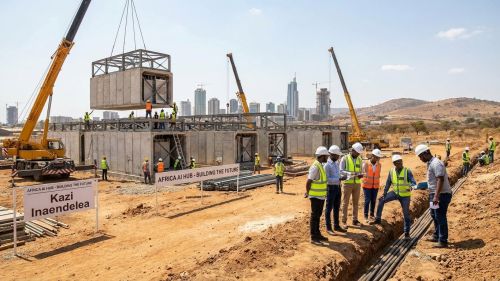
Beyond electricity, connectivity and physical infrastructure form the next layer. Investments in fibre-optic networks, last-mile access, data centres, logistics facilities, and transport networks are essential to ensure AI does not remain confined to urban hubs. AI enhances the strategic value of these assets by linking them directly to productivity gains across finance, health, agriculture, and public services.
Skills and institutional capacity are equally vital. While technical talent is growing, demand now extends to data governance specialists, compliance officers, policymakers, and managers capable of integrating AI into organisational decision-making. Building this broader skills base will determine whether AI is merely a tool for efficiency or a platform for original innovation.
Governance frameworks are still catching up. Many African organisations are experimenting with AI informally, leading to “shadow AI,” where unregulated systems improve productivity but pose risks for data security, compliance, and misinformation. Generative AI also impacts public discourse, reinforcing the need for transparency, accountability, and ethical standards.
Market dynamics are broadening access. Lower-cost AI models with lighter computing requirements, including tools developed in China, are gaining traction in resource-constrained environments. Yet these trends raise strategic questions around data localisation, sovereignty, and regulatory oversight.
Investment trends reflect progress and limitations. African startups have raised over $200 million in AI-related funding in the past two years, highlighting investor interest. Still, most deployments focus on operational efficiency rather than developing new models or datasets, raising concerns about algorithmic exclusion as AI systems are primarily trained on Western data.
Expanding local data ecosystems, supporting multilingual AI models, and strengthening research capacity will ensure AI better reflects African contexts. With coordinated investment in electricity, infrastructure, skills, and governance, AI could evolve from a productivity enhancer into a driver of inclusive growth and innovation across the continent.