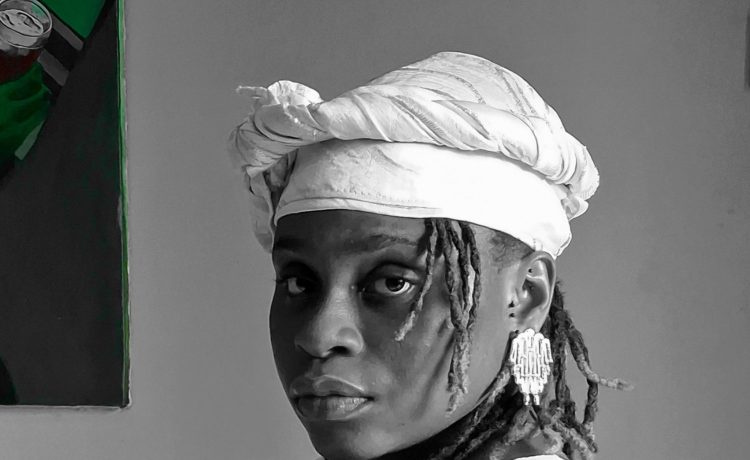
As contemporary African artists continue to push the boundaries of storytelling and self-expression, Temi stands out for creating deeply introspective works that explore identity, mental health, healing, and personal transformation.
Through figurative painting, symbolism, and a distinctive use of color, the artist invites viewers into intimate emotional landscapes where vulnerability becomes a source of strength and self-discovery.
Since beginning a professional career in 2021, Temi has developed a visual language centered on the human figure, using it as a powerful vehicle for examining the complexities of the human experience.
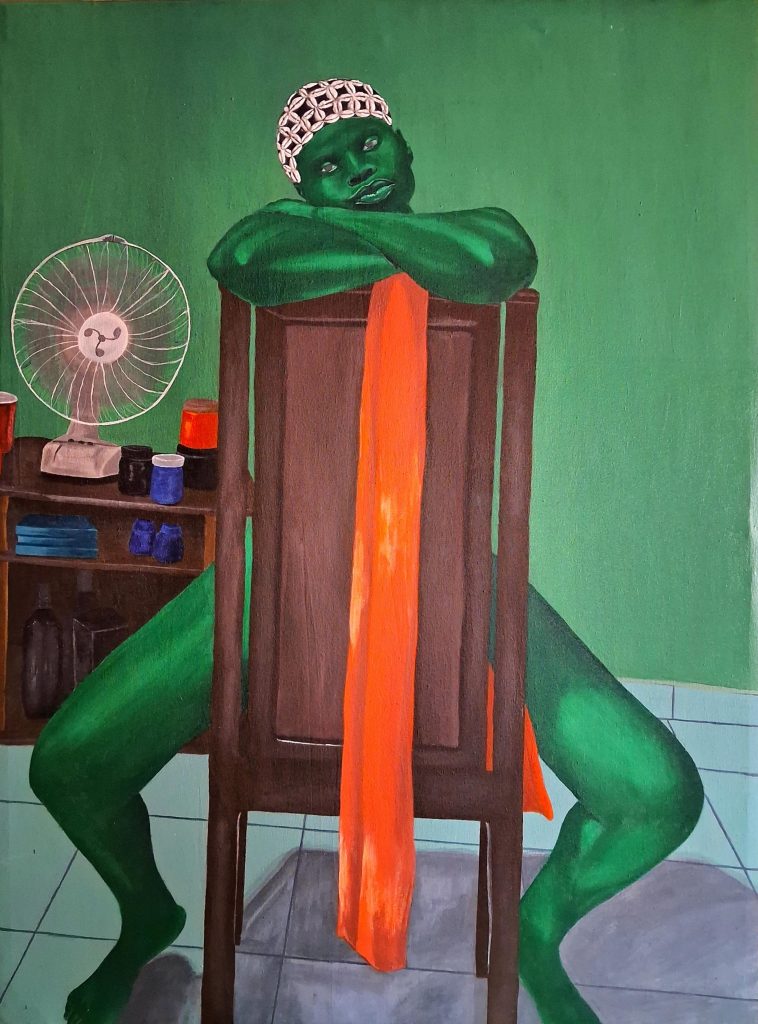
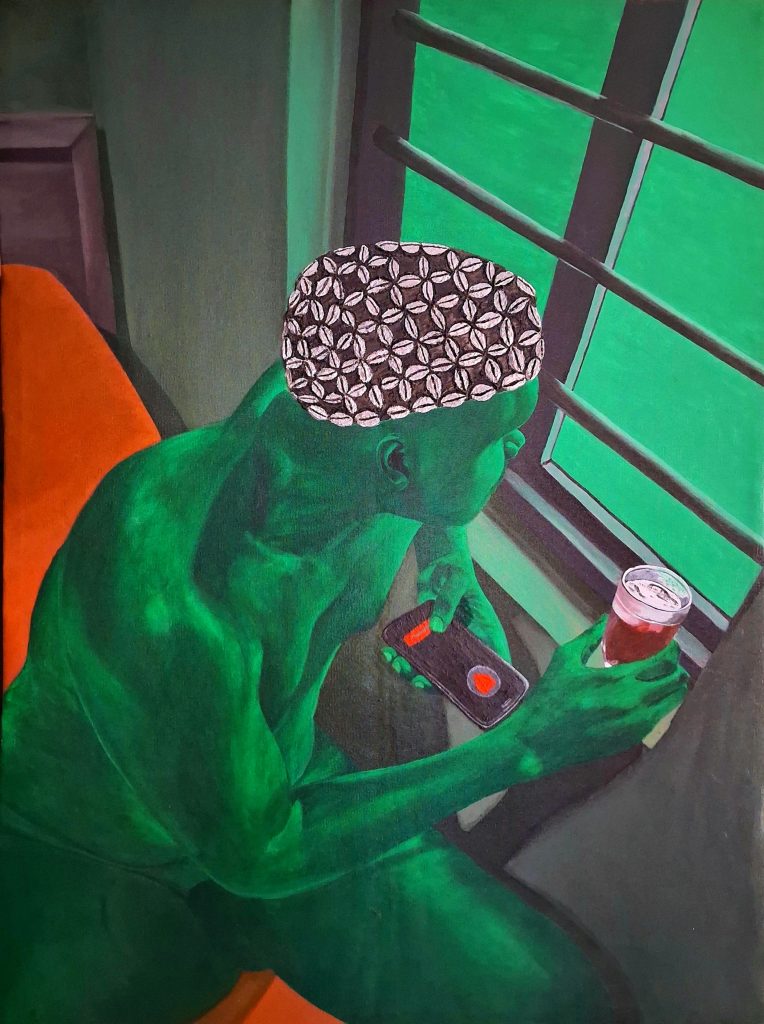
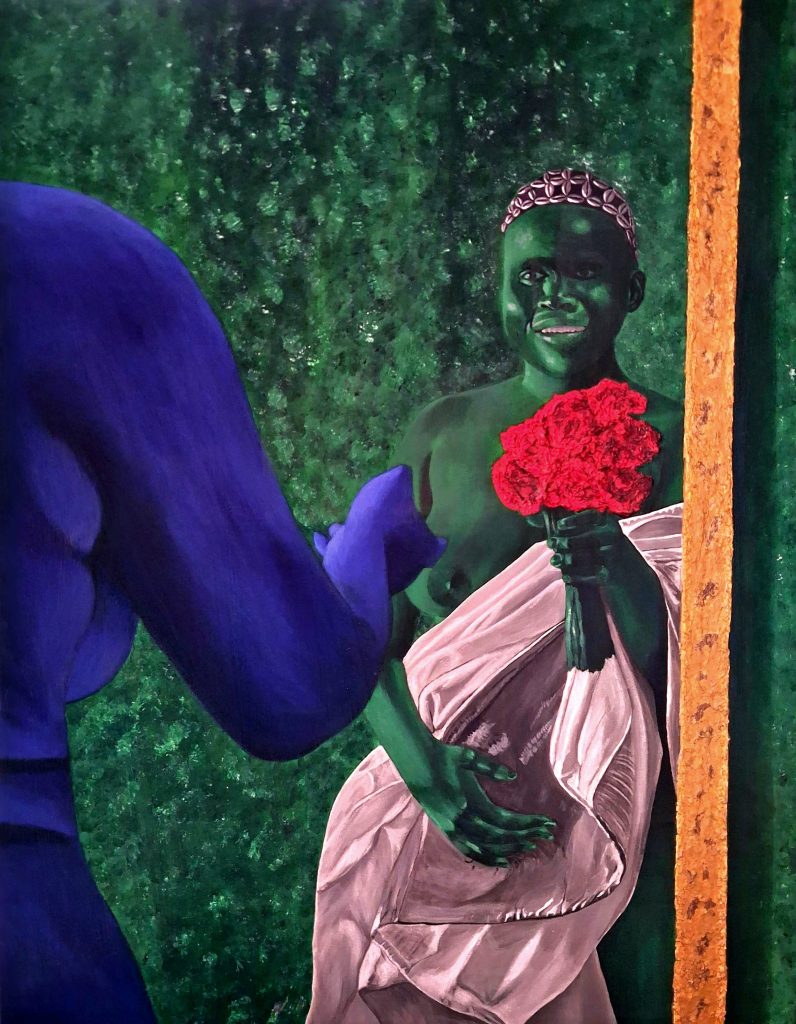
The artist’s signature use of blue—an enduring tribute to maternal influence and emotional depth—has become synonymous with a body of work that encourages reflection, empathy, and authentic connection. More recently, the introduction of green has signaled a new chapter of growth, renewal, and creative exploration.
As one of the featured artists in the forthcoming Here & Now: Becoming, Identity, Memory, and Environment exhibition at Thought Pyramid Art Centre, Lagos, Temi presents works that engage with themes of self-acceptance, healing, and the courage to embrace one’s present reality.
In this exclusive conversation with AV1 News, the artist discusses the role of vulnerability in art, the importance of mental health conversations, the influence of personal experiences on creative practice, and how contemporary African art continues to resonate with audiences around the world.
AV1: Your work explores identity, mental health, healing, and self-discovery. What first inspired you to focus on these deeply personal themes?
Temi: My interest in these themes comes from observing both my own experiences and the experiences of people around me. I’ve always been curious about what people carry internally, the emotions, struggles, and thoughts that often remain unspoken.
As my practice evolved, I realized that art became a way for me to explore these hidden parts of ourselves and create space for conversations that many people find difficult to have.
AV1: You often use the human figure as a vehicle for storytelling. What draws you to figurative painting?
Temi: The human figure is universal. Before we speak, we communicate through our bodies, our expressions, and our presence.
I’m drawn to figurative painting because it allows me to tell stories that people can immediately connect with emotionally. The body becomes a language through which I can express vulnerability, resilience, conflict, and healing.
AV1: Nude forms frequently appear in your work. What do they symbolize within your artistic language?
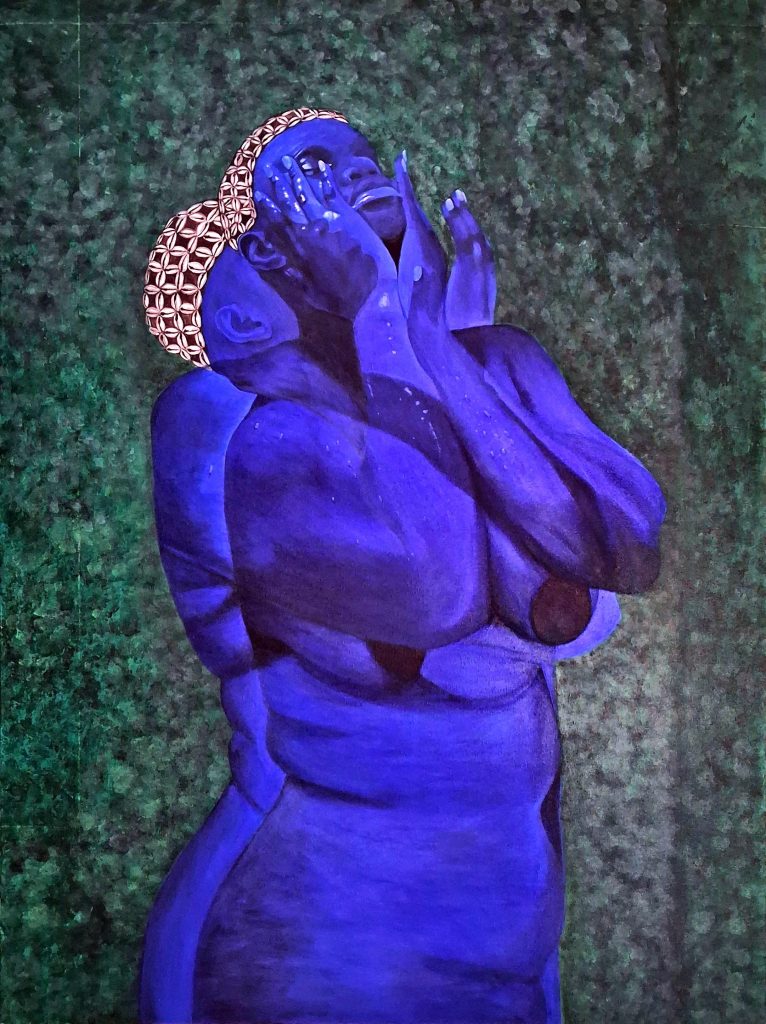
Temi: For me, nudity represents honesty. When the body is stripped of clothing and social markers, what remains is the individual in their most vulnerable state.
The nude form allows me to focus on emotion, humanity, and psychological experiences without distraction. It speaks to authenticity and the courage to be seen as we truly are.
AV1: For years, blue has been a defining feature of your paintings. Why has this color been so important to your practice?
Temi: Blue has always felt emotionally rich to me. It can hold strength and vulnerability at the same time. It carries a sense of introspection, calmness, and depth that aligns closely with the stories I tell through my work. Over time, it became a visual language that helped communicate the emotional atmosphere of my paintings.
AV1: You have described blue as a tribute to your mother. How has her influence shaped both your life and your art?
Temi: Blue is her favorite color, so incorporating it into my work became a subtle way of carrying her presence with me.
Beyond that, she taught me resilience, compassion, and the importance of remaining true to myself. Those values continue to shape both who I am as a person and the stories I choose to tell through art.
AV1: In 2026, you introduced green into your work. What inspired this shift, and what does it represent for you personally?
Temi: The introduction of green felt very natural. After spending years working primarily with blue, I found myself entering a new phase creatively and personally. Green represents growth, renewal, possibility, and openness.
It reflects a period where I began embracing new ideas and allowing myself to explore different emotional territories within my practice.
AV1: Mental health remains a sensitive topic in many societies. How can art contribute to more open conversations around emotional well-being?
Temi: Art has a unique ability to communicate what words sometimes cannot. A painting can create a moment of recognition where someone feels seen or understood.
I believe art helps reduce isolation by showing people that their emotions and experiences are shared. It can open conversations gently and encourage empathy without judgment.
AV1: Your work is often described as psychologically intense. How do you navigate emotional vulnerability while creating?
Temi: I try to approach vulnerability with honesty. Some works require me to sit with uncomfortable emotions, but I see that as an important part of the process.
Creating becomes a way of understanding those feelings rather than avoiding them. Over time, I’ve learned that vulnerability is not weakness; it’s a source of connection and strength.
AV1: The exhibition is titled “Here & Now.” How do your works engage with the ideas of becoming, identity, memory, and environment?
Temi: For me, “Here & Now” is about accepting yourself in the present moment. We spend so much time thinking about who we were or who we should become that we forget to acknowledge who we are right now. The works I’m exhibiting reflect that idea.
They speak about self-acceptance, ownership of one’s story, and finding peace within yourself despite past experiences or outside opinions. I think becoming starts with accepting where you are, and that’s the emotional space these works explore.
AV1: What role does healing play in your creative process?
Temi: Healing is at the center of my practice. Not because my work always provides answers, but because it creates room for reflection and understanding.
Through painting, I process emotions, ask questions, and make sense of experiences. In that way, creating becomes both an act of healing and a search for healing.
AV1: Many viewers find your work deeply relatable. Why do you think vulnerability resonates so strongly with audiences?
Temi: I think vulnerability resonates because it is something everyone experiences. No matter our background, we all know what it feels like to struggle, hope, heal, or question ourselves.
When people encounter honesty in art, they often recognize parts of their own stories within it, and that creates a powerful connection.
AV1: How has your artistic practice evolved since you began your professional journey in 2021?
Temi: When I began professionally, I was primarily focused on portraiture and technical skill. Over time, I became more interested in storytelling and emotional depth.
My work shifted from capturing appearances to exploring psychological and human experiences. I’ve also become more confident in using symbolism, color, and the figure to communicate complex ideas.
AV1: What did international exhibitions such as NFT.NYC and WXw3 Paris teach you about the global reception of African art?
Temi: Those experiences showed me that authentic stories can travel across cultures. People connected with the emotional aspects of the work regardless of where they came from.
They also reinforced the importance of African artists telling our own stories in our own voices. There is a growing global appreciation for contemporary African perspectives, and it was inspiring to be part of that conversation.
AV1: What emotions do you hope viewers experience when they encounter your paintings?
Temi: I hope viewers experience recognition. Not necessarily recognition of the figures themselves, but recognition of their own emotions and experiences.
Whether it’s a sense of reflection, comfort, strength, or vulnerability, I want the work to create a moment where people feel seen. If someone leaves with a deeper understanding of themselves or feels less alone in what they are carrying, then the work has done its job.
AV1: Looking ahead, what new stories or emotional landscapes would you like to explore?
Temi: I’m interested in exploring transformation, renewal, and the different ways people navigate change. My recent introduction of green reflects that curiosity. I want to continue examining the human experience while expanding the emotional and visual language of my work, allowing new stories and possibilities to emerge.