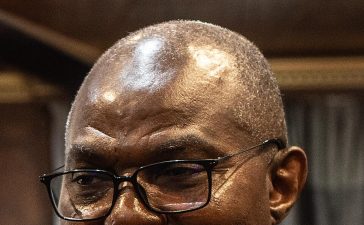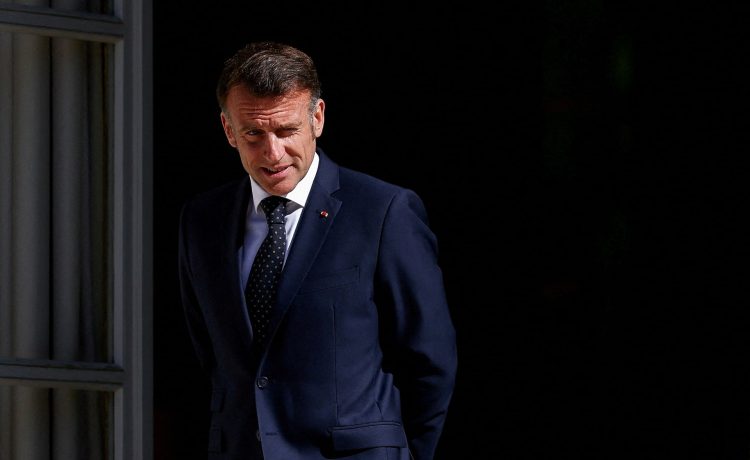
The government of Ghana has said that France has expressed openness to discussions with a coalition of countries demanding reparations for transatlantic slavery, following a recent meeting between President John Dramani Mahama and French President Emmanuel Macron in Paris.
According to Ghana’s Foreign Minister Samuel Okudzeto Ablakwa, who accompanied Mahama to the talks last Wednesday, Macron signalled that France is willing to engage in discussions covering reparations, the return of looted cultural artefacts, and broader issues of global economic injustice and structural racism.
However, an official from the Élysée Palace later clarified on Sunday that discussions focused primarily on France’s ongoing efforts to return culturally significant objects and human remains, as well as the legal frameworks governing restitution. The official did not confirm the wider reparations agenda outlined by Ghana.
The diplomatic exchange comes after the United Nations recently adopted a Ghana-led resolution recognising Transatlantic Slave Trade as the “gravest crime against humanity” and calling for reparations. France, alongside several European countries, abstained from the vote.
France’s U.N. representative explained the abstention by stating concerns that the resolution could imply a “hierarchy among crimes against humanity.”
Despite this, Ablakwa maintained that Macron had indicated willingness for an “open and honest dialogue” on reparations, even as France continues to stop short of formal apologies or commitments to compensation. In 2001, France officially recognised slavery as a crime against humanity, but has yet to formally apologise for its role or establish a reparations framework.
Historians estimate that between the 15th and 19th centuries, at least 12.5 million Africans were forcibly taken during the transatlantic slave trade, with France responsible for the trafficking of roughly 1.3 million people, according to the Slave Voyages database.
The debate over reparations has gained renewed global momentum in recent years, even as critics argue that modern states should not be held legally responsible for historical injustices committed centuries ago. Nonetheless, Ghana and its allies continue to push for formal dialogue on restitution, recognition, and repair.