Kashim Shettima has reaffirmed Nigeria’s commitment to strengthening its partnership with the United Nations in a bid to accelerate the empowerment of women and young people across the country.
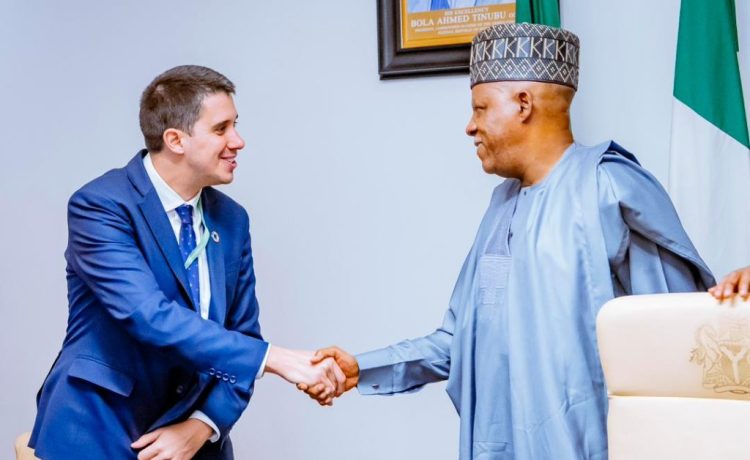
The Vice President made the remarks on Thursday at the Presidential Villa in Abuja while receiving a delegation led by Felipe Paullier, the United Nations Assistant Secretary-General on Youth Affairs.
Shettima said the administration of President Bola Tinubu recognises young people as central to national transformation, adding that government policies are focused on financial inclusion, skills development, job creation, peacebuilding, and security.
“The youths are the backbone of every society’s transformation,” he said, noting that they should not be treated as a statistical population but as active drivers of national progress.
He stressed that the government remains committed to working closely with the United Nations and other development partners to achieve sustainable youth and women empowerment outcomes.
Shettima also proposed the establishment of stronger institutional frameworks to coordinate youth and gender-focused programmes in collaboration with international partners.
According to him, Nigeria aims to convert its growing population into a “demographic dividend” through deliberate investment in human capital development.
“On behalf of the President, I reaffirm this administration’s commitment to youth development,” he said. “The anticipated demographic bulge will be transformed into demographic dividends.”
He further emphasised that President Tinubu supports gender equality and youth empowerment as key pillars of national development strategy.
The UN delegation, led by Paullier, expressed appreciation for Nigeria’s engagement, noting that the country plays a significant role in global discussions on youth development due to its large and dynamic young population.
Paullier said the UN recently established a dedicated office focused on youth affairs to strengthen global support in areas such as human rights protection, education, and skills acquisition.
He added that Nigeria remains a priority partner for the United Nations, particularly in advancing programmes that support innovation, employment, and inclusive development.
He also stressed that progress in youth development is closely tied to gender equality and expanded access to education and job opportunities.