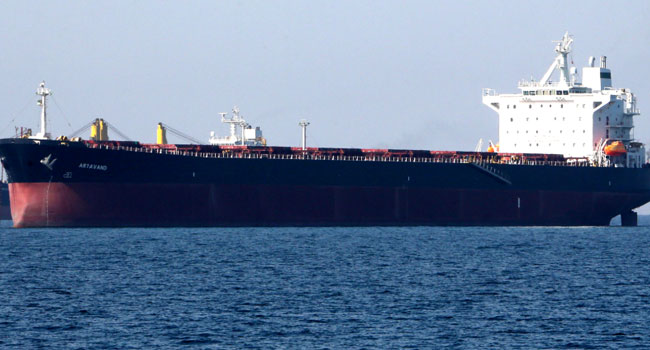
Two ships successfully transited the Strait of Hormuz on Wednesday, marking the first recorded passage since Iran agreed to reopen the vital waterway under a two-week ceasefire with the United States, maritime tracker MarineTraffic reported on X.
“The Greek-owned bulk carrier NJ Earth crossed the Strait at 08:44 UTC, while the Liberia-flagged Daytona Beach transited earlier at 06:59 UTC, shortly after departing Bandar Abbas at 05:28 UTC,” MarineTraffic said.
Iran’s Foreign Minister, Abbas Araghchi, noted that passage would be possible during the ceasefire “via coordination with Iran’s Armed Forces.”
Analysts, however, cautioned that the early transits may not yet indicate a full reopening. “NJ Earth’s transit may be an early sign of movement, but it is still too soon to tell whether this reflects a broader ceasefire-driven reopening or a previously approved exception,” said Ana Subasic, an analyst at MarineTraffic owner Kpler.
The Greek-owned vessel kept its transponder signal on as it passed through the Iranian-approved route near Larak Island, commonly used by most ships over the past three weeks. The destination of the vessel could not be immediately confirmed.
“While we expect more crossings in the coming days, from a risk and compliance perspective this first transit should be read cautiously,” Subasic added.
Shipping operators are preparing to move vessels stranded in the Gulf during the past weeks, with Lloyd’s List estimating that roughly 800 ships remain stuck in the Gulf.
Access to the strait had been severely restricted since February 28 in retaliation against US and Israeli attacks. From March 1 to April 7, only 307 commodity carriers crossed the waterway, representing a 95-percent decline from peacetime traffic.
The Strait of Hormuz remains a critical chokepoint, handling around one-fifth of global crude oil and liquefied natural gas (LNG) in peacetime, making its reopening crucial for international energy markets.