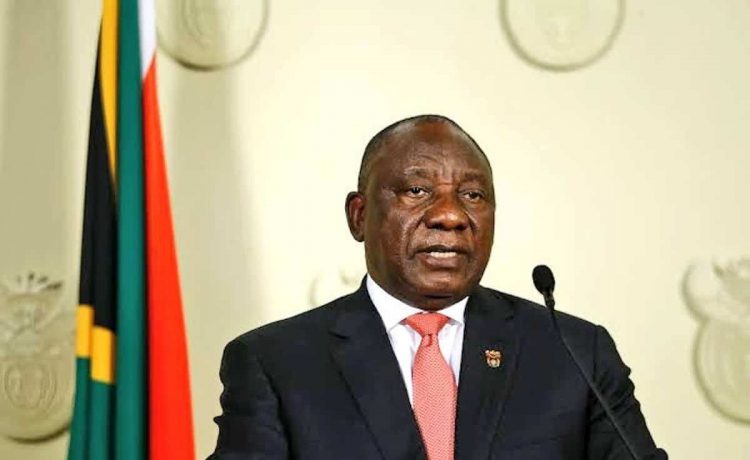
South African President Cyril Ramaphosa on Wednesday received the diplomatic credentials of the new United States ambassador, Brent Bozell, at a formal ceremony in Pretoria, marking a new chapter in relations between the two countries despite ongoing tensions.
Bozell, a conservative media critic and strong supporter of US President Donald Trump, officially assumed the diplomatic post in February. His appointment, however, has been accompanied by controversy following remarks about South Africa’s racial policies and court rulings.
During a brief ceremony held at the Sefako Makgatho Presidential Guest House in the capital, Bozell arrived with his spouse and was welcomed with a guard of honour before presenting his credentials to Ramaphosa.
Speaking after the ceremony, the 70-year-old envoy said he had quickly developed a strong appreciation for the country.
“Before I arrived here, I cannot tell you how many people told me that in short order, I’d fall in love with the country. It’s only taken two months and I can confirm that has happened,” Bozell said.
He added that both countries share common values and interests, expressing optimism about strengthening cooperation during his tenure.
“We are two nations with great shared values and interests… It’s my goal in my time here to build on those shared interests, to build on self-respect, to build on our shared values, to take our two nations to places they’ve never been,” he said.
Nineteen other diplomats also presented their credentials during the ceremony, including representatives from the Sahrawi Arab Democratic Republic, Haiti, and Cuba.
Ramaphosa used the occasion to emphasise the importance of diplomatic conduct, urging foreign envoys to respect the sovereignty of their host country and raise concerns through discreet channels rather than public confrontation.
“It is this approach that I believe builds strong relationships between nations and helps to advance the interests of our respective countries based on mutual respect,” the South African leader said.
Relations between South Africa and the United States have been strained in recent months over several issues, including Pretoria’s genocide case against Israel and Trump’s controversial claims that white Afrikaners face persecution in the country.
Bozell was also recently summoned by South African authorities to clarify remarks he made describing the apartheid-era chant “Kill the Boer, kill the farmer” as hate speech and criticising policies aimed at empowering the country’s Black majority.
While the chant remains controversial, South African courts have ruled that it should be viewed within the historical context of the anti-apartheid struggle that ended white minority rule in 1994.
Following the backlash, Bozell later said the US government respected the independence and decisions of South Africa’s judiciary.
Diplomatic tensions between the two nations deepened last year when Washington expelled Pretoria’s ambassador, Ebrahim Rasool, after he criticised Trump’s “Make America Great Again” political movement. South Africa has yet to name a replacement.
Despite the friction, economic ties remain significant. South Africa is the United States’ largest trading partner in Africa, hosting more than 500 American businesses and about 30,000 US citizens.