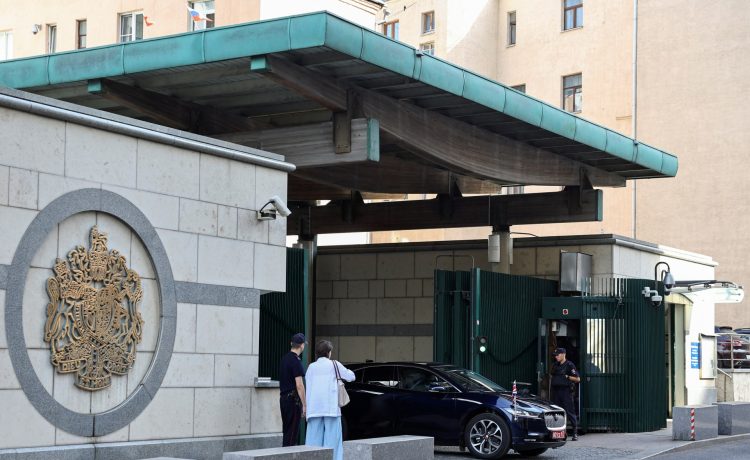
Russia on Monday expelled a British diplomat, alleging he was engaged in espionage claims firmly rejected by United Kingdom as “complete nonsense.”
The diplomat, identified as 29-year-old embassy secretary Albertus Gerhardus Janse Van Rensburg, was accused by Russia’s FSB of carrying out “subversive intelligence activities that threaten Russia’s security.”
“A decision was made to strip Janse Van Rensburg of his accreditation, and he was ordered to leave Russia within two weeks,” the FSB said.
The Russian foreign ministry summoned Britain’s charge d’affaires over the incident and warned that the United Kingdom should not retaliate.
In response, London accused Moscow of waging an “aggressive and co-ordinated campaign of harassment.” A spokesperson for the British foreign ministry said, “The accusations made today by Russia against our diplomats are complete nonsense. Russia is pumping out malicious and completely baseless accusations about their work.”
Moscow and London have a long history of diplomatic expulsions linked to spying allegations. Expulsions from one side are often followed by reciprocal actions from the other.
Relations between the two countries, already strained over the war in Ukraine, have been further complicated by espionage controversies spanning decades.
Notable cases include the 2006 poisoning of former FSB officer and Russian defector Alexander Litvinenko in London and the 2018 poisoning of Russian double agent Sergei Skripal with a Novichok nerve agent in Salisbury, United Kingdom. The Skripal incident resulted in the death of a member of the public who came into contact with the discarded nerve agent delivery device.
Experts say the latest expulsion marks another low point in diplomatic relations between London and Moscow, highlighting ongoing tensions over intelligence operations and security concerns.