Organizers of the Dakar 2026 Youth Olympic Games (YOG) held a press conference on Wednesday following the eighth coordination commission meeting to provide updates on infrastructure and preparations for the first Olympic event to be held in Africa.
The Games are scheduled to take place from Oct. 31 to Nov. 13, 2026, across three host cities: Dakar, Diamniadio, and Saly. These locations were chosen for their dynamism, infrastructure, and ability to host competitions safely and effectively.
In Dakar, three venues will serve as the main showcase sites: the Iba Mar Diop multisport complex in Medina, the Tour de l’Oeuf with its Olympic pool, and the Western Corniche, which will host celebrations and youth engagement activities. This arrangement positions the capital as a central hub for sport, culture, and public interaction.
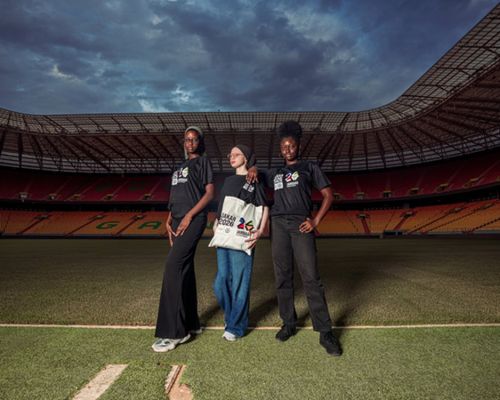
Diamniadio, 30 km from Dakar, will act as the logistical hub. The 50,000-seat Me Abdoulaye Wade Stadium will host the opening ceremony and archery events. Other venues in Diamniadio include the Dakar Arena, the Exhibition Center, and the Equestrian Center, providing a robust capacity for competitions and spectators. Saly, 80 km from Dakar, will host temporary facilities for water and beach sports. The Games’ structure relies on a three-part system: showcase in Dakar, logistical hub in Diamniadio, and coastal venue in Saly.
Mamadou Diagna Ndiaye, president of the Dakar 2026 Youth Olympic Games Organizing Committee (COJOG) and head of the Senegalese National Olympic and Sports Committee (CNOSS), stated that overall construction is currently between 95% and 96% complete, with all work expected to finish by July. This was confirmed by Christophe Dubi, executive director of the International Olympic Committee (IOC).
The Games will host 2,700 athletes aged 14 to 17 from 206 countries, including a refugee team composed of African athletes. Competitions will span 35 disciplines, such as athletics, swimming, archery, badminton, Baseball5, 3×3 basketball, boxing, breaking, road cycling, equestrian jumping, fencing, futsal, artistic gymnastics, beach handball, judo, coastal rowing, rugby sevens, sailing, skateboarding (street), table tennis, taekwondo, triathlon, beach volleyball, beach wrestling, and wushu. A total of 151 events will be held, with 72 events each for male and female athletes and seven mixed events.
Athletes will stay in the Youth Olympic Village at Amadou Mahtar MBOW University in Diamniadio, close to competition venues and directly connected to the Regional Express Train (TER) station. Additional certified transport will be provided to ensure seamless movement for delegations, according to Ibrahima Wade, general coordinator of Dakar 2026.
Security remains a top priority. “I think that today we can hold completely ‘safe’ Games,” Ndiaye said, assuring parents and international delegations that all scenarios have been considered.
The traditional Olympic torch relay is scheduled to begin on Sept. 10, 2026, in Athens, Greece. The flame will then be flown to Dakar and tour the 14 regions of Senegal in 30 stages from Sept. 14 to Oct. 16, 2026.