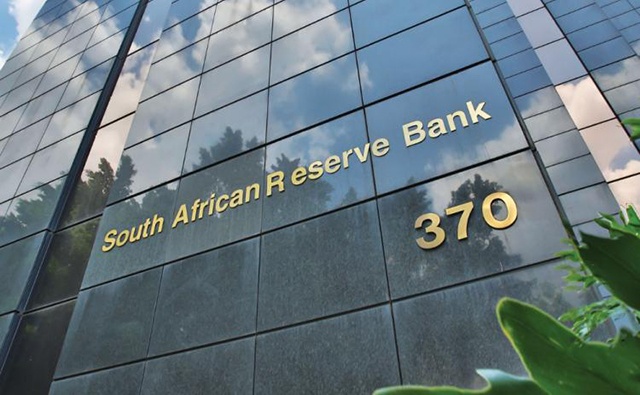
South African Reserve Bank (SARB) announced on Thursday that it would hold its benchmark interest rate steady at 6.75%, warning that further policy tightening may be necessary if the ongoing war involving Iran continues to push oil prices higher.
Governor Lesetja Kganyago confirmed that the five-member monetary policy committee’s decision was unanimous, aligning with forecasts from a Bloomberg survey of 15 economists.
“The latest forecasts from our Quarterly Projection Model show rates unchanged for a longer period, postponing the cuts from the January projections,” Kganyago said. “The policy stance is treated as moderately restrictive, which helps bring inflation back to target.”
The announcement provided relief to benchmark government bonds, with the yield on 2036 securities falling eight basis points from a session high to 9.11%, while the South African rand pared earlier losses against the U.S. dollar to trade 0.3% weaker at 17.0266 as of 3:28 p.m. in Johannesburg.
Kganyago noted that the rand serves as “a shock absorber for the South African economy,” and that some offshore investors may repatriate funds in response to market fluctuations.
The central bank has maintained a cautious approach in previous meetings, citing elevated risks and geopolitical uncertainty, which analysts say has allowed policymakers the flexibility to hold rates steady this week.
“In previous meetings, we warned of elevated risks, and we have been proceeding cautiously in our rate setting. Now a crisis has hit, this prudent approach is proving appropriate,” Kganyago added.
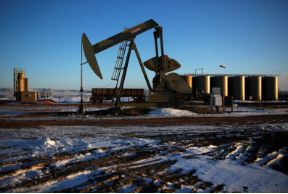
South Africa, which imports all its oil, has seen prices surge by more than 40% since the escalation of the US-Israel–Iran conflict on February 28, creating added pressure on the SARB’s 3% inflation target.
The central bank’s decision underscores the delicate balance between supporting economic stability and addressing rising inflation pressures driven by external shocks in the global energy market.