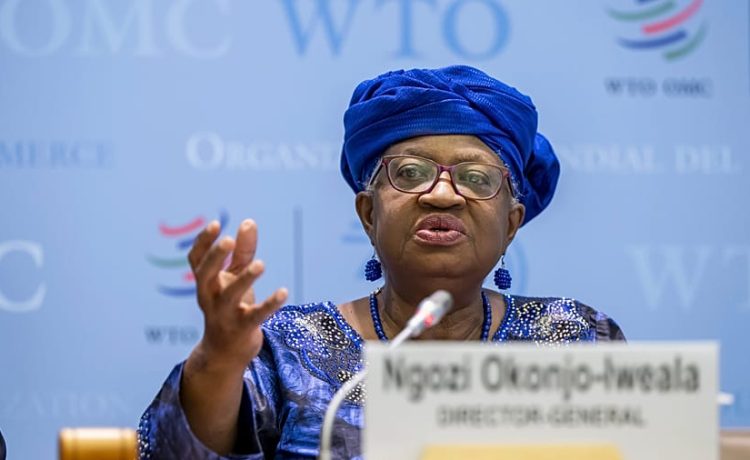
The Director-General of the World Trade Organization, Ngozi Okonjo-Iweala, has called for sweeping reforms to the global trade system, warning that the world order that once shaped international commerce has fundamentally changed.
Okonjo-Iweala made the remarks during the opening of the 14th WTO Ministerial Conference in Yaoundé, the capital of Cameroon, where delegates gathered for four days of meetings aimed at discussing the future of global trade governance.
According to her, countries must now look ahead and rethink the foundational rules guiding the global trading system.
“The world order and multilateral system we used to know has irrevocably changed. We will not get it back. We must look to the future,” Okonjo-Iweala told delegates at the conference.
She explained that reforming the global trade system would involve preserving the elements of the old order that worked effectively while addressing weaknesses and filling gaps in the emerging framework.
“That means figuring out what worked well in the old order so we can keep it and build on it. It means identifying what did not work well so we can repair it. And it also means recognising the gaps in the renewed order we are shaping so we can close them,” she said.
The ministerial conference comes at a time of heightened geopolitical tension and economic uncertainty across the globe.
One of the key concerns is the ongoing conflict in the Middle East involving the United States, Iran and Israel, which has triggered disruptions in energy markets and contributed to a wider global energy crisis.
The WTO has also faced internal divisions among member countries in recent years, weakening its ability to effectively mediate global trade disputes and advance new trade agreements.
Okonjo-Iweala stressed that decisive action is necessary to restore confidence in the organisation and adapt its policies to the realities of a rapidly changing world economy.
Over the course of the conference, about 4,000 delegates from member countries are expected to debate strategies for strengthening the global trading system and improving cooperation among nations.
Discussions are also expected to address rising protectionism, including tariffs imposed by the United States on several countries, which have added to the uncertainty in global trade flows.
Analysts say the outcomes of the conference could shape the direction of international trade policy in the coming years, particularly as nations seek new ways to manage geopolitical tensions, supply chain disruptions and shifting economic alliances.
For Okonjo-Iweala, the moment represents an opportunity to rethink the global trade architecture and ensure it remains relevant in a rapidly evolving world.