The United Nations General Assembly (UNGA) has voted to recognise the enslavement of Africans during the transatlantic slave trade as “the gravest crime against humanity,” a move intended to promote healing and justice for descendants of enslaved peoples.
The resolution, proposed by Ghana, calls on UN member states to consider issuing apologies for the slave trade and contributing to a reparations fund, though it does not specify an amount. The proposal was adopted with 123 votes in favour, three against – the United States, Israel, and Argentina – and 52 abstentions, including the United Kingdom and several European Union member states.
Unlike Security Council resolutions, General Assembly measures are not legally binding, but they carry significant moral and political weight.
Speaking ahead of the vote, Ghanaian President John Mahama said:
“Let it be recorded that when history beckoned, we did what was right for the memory of the millions who suffered the indignity of the slave trade and those who continue to suffer racial discrimination. The adoption of this resolution serves as a safeguard against forgetting. It also challenges the enduring scars of slavery.”
Ghana’s Foreign Minister Samuel Okudzeto Ablakwa clarified that the reparations sought are not for African leaders personally, but to fund educational initiatives, endowments, and skills training programs for affected communities.
The resolution, supported by the African Union and the Caribbean Community, emphasises that the consequences of slavery persist today in the form of racial inequalities and underdevelopment affecting Africans and people of African descent worldwide. Ablakwa noted:
“Many generations continue to suffer exclusion and racism because of the transatlantic slave trade, which separated millions from the continent and left them impoverished.”
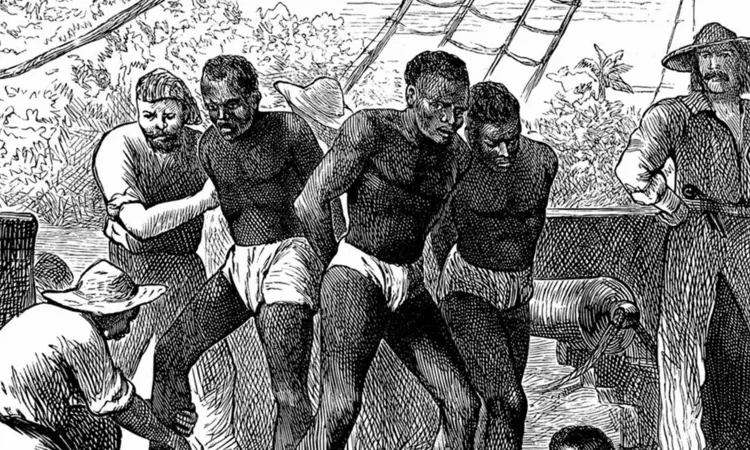
Estimates suggest that between 1500 and 1800, 12–15 million Africans were captured and transported to the Americas, with over two million dying during the journey.
Ahead of the vote, the UK acknowledged the historical harm but raised concerns over the resolution’s wording and implications under international law. UK Ambassador James Kariuki stated:
“No single set of atrocities should be regarded as more or less significant than another.”
The adoption of the resolution marks a significant step in the global campaign for reparatory justice, which has gained momentum in recent years, including through African Union initiatives and Commonwealth discussions.