Australia and the European Union have signed a free trade agreement worth about A$10bn ($7bn; £5.2bn), eliminating most export tariffs on Australian goods and opening European markets to more Australian products, including beef, wine, and dairy.
The deal, inked on Tuesday, allows Italian-style sparkling wine produced in Australia to continue being sold domestically as prosecco, though the name will be phased out for exports over a 10-year period. Other EU-protected names such as parmesan can still be used, while feta will face gradual restrictions under naming-rights rules.
Under the agreement, almost all EU tariffs on Australian agricultural products—including wine, fruit, vegetables, olive oil, seafood, most dairy, wheat, and barley—will be removed, representing an estimated saving of A$37m for Australian wine exporters. Australian consumers will also benefit from cheaper European wine, spirits, biscuits, chocolates, and pasta.
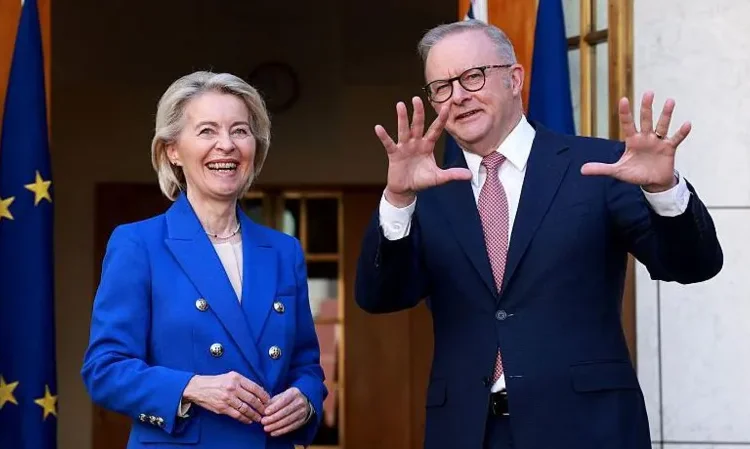
Anthony Albanese highlighted the historic links between Australia and Europe, noting the contribution of migrants in shaping the country’s culinary traditions.
Ursula von der Leyen said the deal reflects a “unique relationship” and provides a “perfect balance” for trade, allowing easier exports to the EU while increasing availability of European goods in Australia.
However, the deal’s meat export provisions drew criticism from Meat and Livestock Australia. While Australian farmers had hoped for an annual quota of 50,000 tonnes, the agreement allows about 30,000 tonnes, up from 3,389 tonnes. CEO Andrew McDonald called this a “missed opportunity” for the red meat sector.
In addition to trade provisions, Australia and the EU signed a new security and defence partnership covering counter-terrorism, space, maritime security, and defence industry collaboration. They also pledged joint efforts on critical minerals projects, including lithium and tungsten, emphasizing “collective resilience” amid global geopolitical shifts.
Von der Leyen also praised Australia’s “trailblazing” social media policy that bans under-16s from having accounts on ten major platforms, citing it as an example of innovative regulation in a changing world.