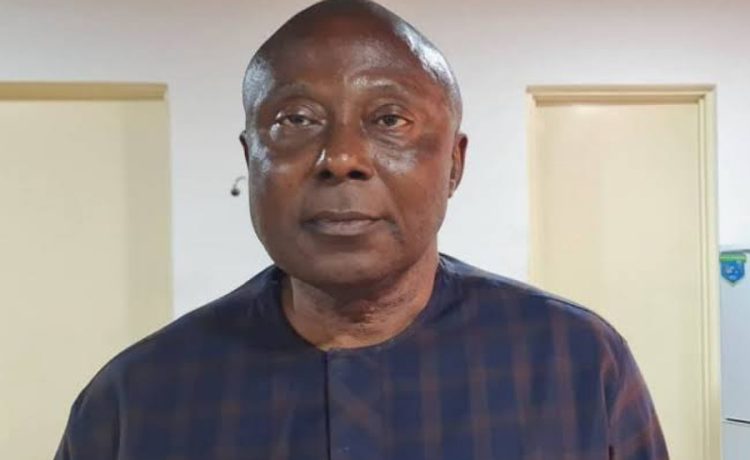
The Economic and Financial Crimes Commission (EFCC) has secured the conviction of a former Acting Accountant-General of the Federation, Chukwunyere Anamekwe Nwabuoku, who has been sentenced to 72 years in prison for fraud involving N868.46 million.
The anti-graft agency made the announcement on Monday via its official X handle, stating that Nwabuoku was prosecuted before the Federal High Court in Abuja on charges related to money laundering.
According to the EFCC, the court found him guilty after a detailed trial process. The commission noted that the case involved the laundering of public funds amounting to N868.46 million.
Nwabuoku was appointed Acting Accountant-General of the Federation in May 2022. His appointment followed the suspension of Ahmed Idris over an alleged fraud case. However, Nwabuoku’s tenure was short-lived, as he was removed from office just a few weeks later.
The EFCC formally arraigned him on January 15, 2025, on nine amended counts bordering on money laundering. He was initially granted bail set at N500 million, with two sureties required to provide the same amount.
Court documents revealed that in one of the counts, Nwabuoku allegedly conspired with several companies to convert funds suspected to be proceeds of unlawful activities. The companies named in the charge include Temero Synergy Concept Limited, Turge Global Investment Limited, Laptev Bridge Limited, and Arafura Transnational Afro Limited.
The offences were said to violate provisions of the Money Laundering (Prohibition) Act, 2011 (as amended), which prescribes penalties for individuals found guilty of financial crimes.
The EFCC also disclosed that part of the offences dated back to Nwabuoku’s time as Director of Finance and Accounts at the Ministry of Defence between 2019 and 2021. During that period, he allegedly laundered about N86 million.
To establish its case, the prosecution presented nine witnesses during the trial, including officials from financial institutions. Their testimonies and evidence played a key role in securing the conviction.
The sentencing marks another significant step in the EFCC’s ongoing efforts to combat corruption and financial crimes in Nigeria.