US President Donald Trump has criticised members of the NATO for refusing to participate in the ongoing military operation in Iran, describing their decision as a “very foolish mistake.”
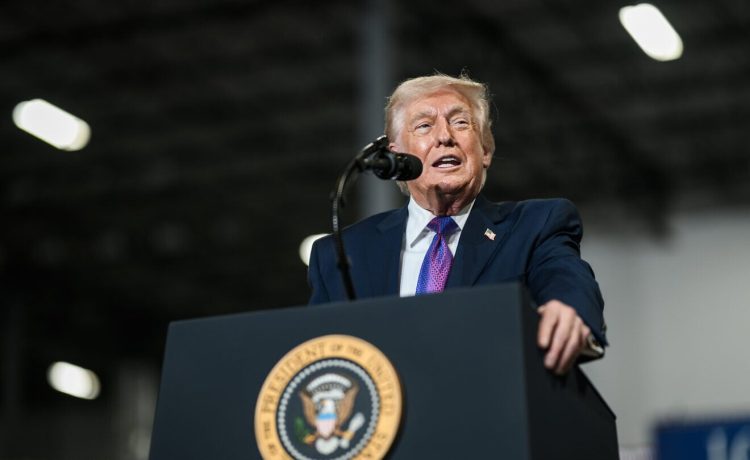
Speaking to reporters at the White House during a St. Patrick’s Day visit by Irish Prime Minister Micheál Martin, Trump said most NATO allies had indicated they would not get directly involved in the conflict.
“I think NATO is making a very foolish mistake,” Trump said. “Everyone agrees with us, but they don’t want to help. And we, as the United States, have to remember that because we think it’s pretty shocking.”
Despite his criticism, the US president said he currently has no plans to retaliate against NATO countries for their stance.
The conflict, involving joint US and Israeli military operations, has entered its third week, with rising tensions across the Middle East. Trump maintained that while allies support the mission in principle, they are unwilling to commit military resources.
The president also renewed calls for international assistance in securing the Strait of Hormuz, a vital waterway through which around 20 percent of the world’s oil supply passes. The appeal follows retaliatory actions by Iran, including the deployment of drones, missiles, and naval mines that have disrupted tanker movements.
However, several US allies have declined immediate involvement in efforts to reopen the strait, effectively rejecting Washington’s request for military support.
Earlier in the day, Trump took to his Truth Social platform to assert that the United States does not require NATO assistance, citing what he described as significant military success.
“Because of the fact that we have had such Military Success, we no longer ‘need,’ or desire, the NATO Countries’ assistance — WE NEVER DID!” he wrote.
He also singled out key US allies including Japan, Australia, and South Korea, underscoring frustrations within the administration over the lack of broader international participation.
Trump has previously threatened to withdraw the United States from NATO, though he did not revisit that possibility during Tuesday’s remarks.
As the conflict continues, divisions among Western allies highlight the growing complexity of international cooperation in the face of escalating geopolitical tensions.