The Federal Government has projected that Nigeria’s mining sector will increase employment from the current 0.3 per cent to 500,000 jobs by 2030, with expectations of attracting $1 billion in foreign direct investment (FDI) annually by 2025.
These targets were outlined in the Nigerian Industrial Policy unveiled on Tuesday in Abuja, which details strategies to harness the country’s mineral resources for economic diversification and industrial growth.
The policy aims to raise the sector’s contribution to the Gross Domestic Product (GDP) to eight per cent by 2030 and 10 per cent by 2035. Although the mining industry has grown significantly in recent years, the government says it still falls short of its full potential.
Nigeria attracted $100 million in FDI in mining in 2022, up from $78 million in 2019, with investors from countries including China, Brazil, and India. The government anticipates that the sector will generate $1 billion annually by 2025 if properly harnessed.
The mining industry contributed about N4.4 trillion, or 5.54 per cent of GDP, in 2024, up from N400 billion (0.33 per cent) in 2015. The sector currently provides only 0.3 per cent of employment but could create up to 500,000 jobs by 2030.
The policy commits to creating a regulatory framework that promotes sustainable development, social responsibility, and economic growth. This includes licensing, environmental impact assessments, safety standards, and incentives such as tax breaks, subsidies, and investment guarantees to attract investors.
Value-added activities, such as processing and manufacturing, will also be encouraged to maximize the economic benefits of Nigeria’s rich mineral endowment, which includes coal, gold, bitumen, gypsum, iron ore, lead/zinc, limestone, gemstones, and more.
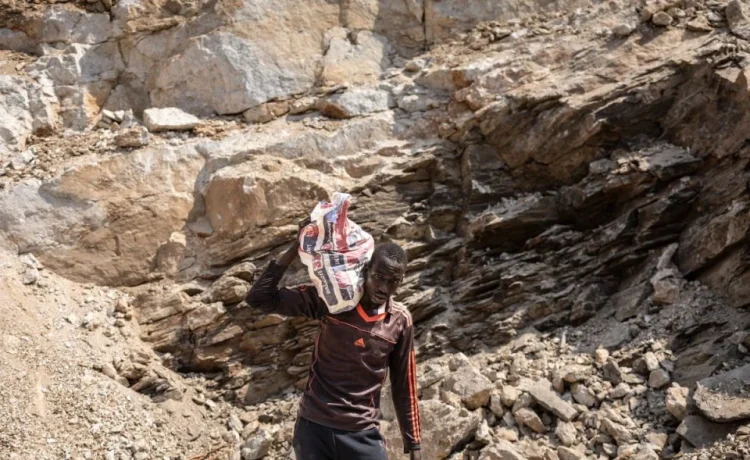
The government plans to support mineral processing zones and industrial parks near mining belts, encourage local sourcing for industries like steel, aluminium, and battery manufacturing, and establish a blended Artisanal Mining Transition Fund to formalize small-scale mining operations.
Minister of State for Industry, Trade and Investment, John Enoh, described the policy as a turning point for Nigeria’s industrialisation, stating that it “reaffirms our national resolve to diversify the economy, create inclusive prosperity, and secure Nigeria’s place as a leading industrial hub in Africa and the wider global economy.”
The policy also includes measures to strengthen development finance, recapitalize the Bank of Industry, scale sectoral intervention funds, and provide credit guarantees and low-interest financing for micro, small, and medium-sized enterprises.
Enoh emphasised that the government is dedicating up to five per cent of GDP for industrial financing and leveraging public-private partnerships to ensure the policy’s ambitions are matched with resources.