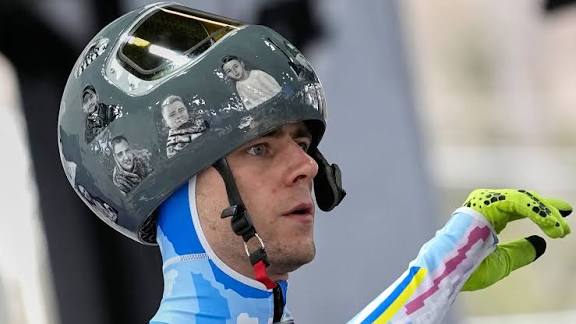
Ukrainian skeleton racer Vladyslav Heraskevych has been disqualified from the 2026 Winter Olympics after refusing to compete without a helmet that honours victims of Russia’s war against Ukraine.
Games officials withdrew the 27-year-old’s accreditation on Thursday, saying his headgear violated rules banning political expressions during competition.
The helmet features images of Ukrainian athletes and civilians killed since Russia’s invasion in 2022, a tribute Heraskevych described as a symbol of national dignity and remembrance.
Despite being warned, he insisted he would not remove it.
The International Olympic Committee (IOC) said the decision followed his refusal to comply with its athlete expression guidelines.
IOC stance
Under Olympic rules, political statements are not allowed during events.
Athletes may express opinions:
- during press conferences
- on social media
- outside competition areas
The IOC said it offered Heraskevych alternatives, including:
- wearing a plain black armband
- displaying the helmet during training
- showing it after races in the mixed zone
However, he declined those options.
As a result, the International Bobsleigh and Skeleton Federation (IBSF) ruled the helmet non-compliant and removed him from the Games.
Ukraine reacts
The decision sparked outrage in Ukraine.
President Volodymyr Zelensky had publicly backed the athlete’s right to wear the memorial helmet.
Foreign Minister Andriy Sybiga described the ruling as:
“A moment of shame.”
Ukraine’s Sports Minister also threatened possible legal action.
In a post on X, Heraskevych responded defiantly:
“This is the price of our dignity.”
Athlete’s position
Speaking at the Cortina Sliding Centre, Heraskevych said the punishment was unfair.
He argued that other athletes had made similar gestures without sanctions and warned the decision could be used as propaganda against Ukraine.
He still has the option to appeal to the Court of Arbitration for Sport (CAS), though no appeal had been filed at the time of reporting.
Bigger picture
The case highlights the ongoing tension between:
- Olympic neutrality rules
- athletes’ freedom of expression
- and the emotional weight of global conflicts
For many Ukrainians, the helmet represented remembrance.
For Olympic officials, it crossed into political messaging.
The disagreement ultimately cost Heraskevych his place at the Games.