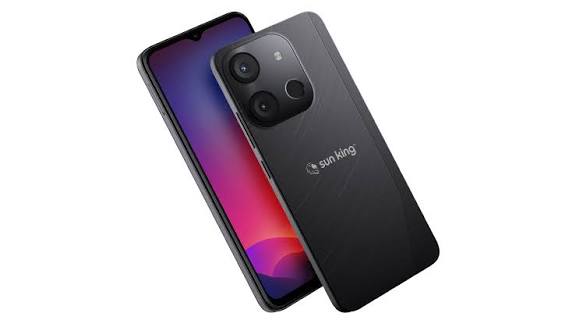
Sun King, widely known across Africa for its yellow solar lanterns and pay-as-you-go home power systems, has officially entered the smartphone market with the launch of its first device in Kenya.
The company unveiled the EZ 1, an entry-level Android smartphone assembled locally at its new manufacturing facility in Nairobi, marking a major shift from solar products to consumer electronics. The move is part of Sun King’s broader strategy to make digital devices more affordable while boosting local production.
On paper, the EZ 1 offers modest but practical specifications. It comes with 4GB RAM, 128GB storage, a 6.56-inch display, and a 5000mAh battery — similar to many budget smartphones already in the market.
But the real difference isn’t the hardware — it’s how the phone is sold.
Instead of paying the full price upfront, customers can take the device home with a KSh 2,999 deposit and then make KSh 60 daily payments using Sun King’s familiar “lipa pole pole” (pay small small) financing model. This same system has already helped hundreds of thousands of households afford solar kits.
Why this matters
For many Kenyans, the biggest barrier to smartphone ownership isn’t availability — it’s cost.
Smartphones are now essential tools for:
- mobile money and banking
- communication
- online learning
- running small businesses
- accessing jobs and services
Yet imported devices often remain too expensive for low-income households. Sun King’s daily payment plan spreads the cost over time, making ownership feel more manageable.
The bigger picture
Kenya’s local phone assembly industry has been expanding, with companies like M-Kopa already producing millions of devices domestically. Still, the market faces stiff competition from cheap imports and grey-market phones, which makes it tough for local manufacturers to compete on price.
Sun King’s strategy combines local manufacturing + flexible financing to address digital exclusion — a model that could reshape how affordable tech reaches underserved communities.
The catch
There are concerns. Paying in installments can sometimes lead to what experts call a “poverty penalty” — where customers ultimately spend more than they would if they bought the device outright.
Additionally, entry-level specs may not hold up long term as apps and software become more demanding.
Even so, for many people who simply cannot afford a lump-sum payment, the EZ 1 may offer a practical path to staying connected and participating in the digital economy.
For thousands of Kenyans, it could mean the difference between being offline and earning a living online.
Figure of the Day
📊 80.8% — Kenya’s smartphone penetration rate, representing over 42.3 million active devices connected to mobile networks as of mid-2025.