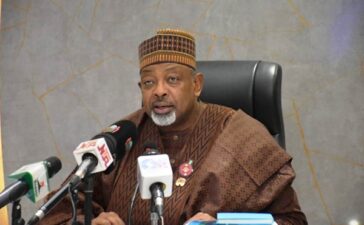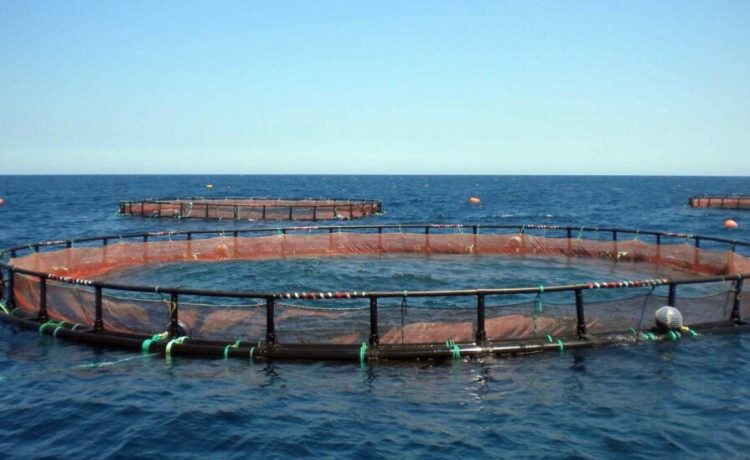
Burkina Faso’s Agriculture Minister, Ismael Sombie, launched a new aquaculture production project on Wednesday, February 4, at the Yakouta dam in Dori, northeastern Liptako region. The project focuses on fish farming using floating cages, a modern aquaculture technique in which fish are raised in submerged cages installed in reservoirs.
At the launch, 22 floating cages were stocked with over 150,000 fingerlings. Authorities said the number of cages will increase to 50 in a second phase, with an estimated annual production capacity of 200 tons. The initiative reflects growing interest in floating cage farming as a strategy to develop the country’s aquaculture sector.
Floating cage production was first tested at the Samandeni dam in the Hauts-Bassins region in April 2024 under the Agropastoral and Fisheries Offensive, with 180 cages installed and a target of 54,000 tons annual production. Building on that success, a similar project supported by the “Dumu Ka Fa” food sovereignty fund was launched at the Bagre dam, involving 44 private operators and an expected production of up to 1,500 tons per year.
Currently, aquaculture contributes minimally to Burkina Faso’s domestic fish supply. FAO data show that of the 31,406 tons of fish produced in 2023, only 1,127 tons came from aquaculture, with the rest from capture fishing. Fish consumption stood at 241,441 tons, leaving a production gap of over 200,000 tons covered through imports. Between 2020 and 2024, Burkina Faso imported an average of 165,141 tons of fishery products annually, costing 19.3 billion CFA francs ($34.7 million).
Official estimates indicate that the country’s theoretical aquaculture potential is 110,000 tons per year, yet only about 1% is currently exploited. To encourage investment, the amended 2025 finance law introduced a VAT exemption on fish feed, which accounts for roughly 80% of aquaculture production costs in Africa.
Authorities hope the new floating cage project, alongside policy incentives, will help harness Burkina Faso’s untapped aquaculture potential, reduce import dependence, and create economic opportunities for private operators.