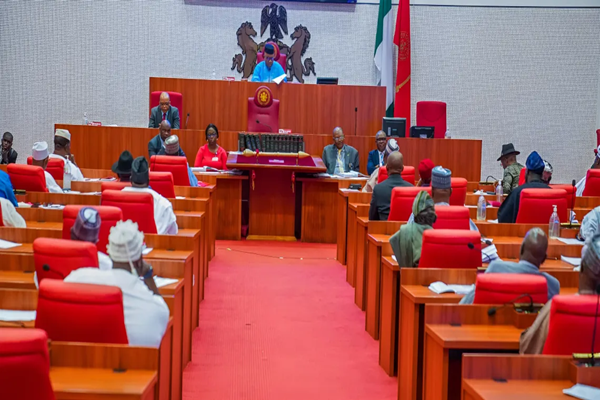
The Senate on Tuesday urged state governments and the Federal Capital Territory Administration to establish coordinated emergency referral and response systems linking public and private hospitals, amid growing concerns over avoidable deaths caused by poorly managed medical emergencies.
Lawmakers said the proposed system would ensure rapid access to life-saving medicines, particularly during emergencies such as snakebites, scorpion stings, poisoning and drug overdoses, where delays in treatment often prove fatal.
The resolution followed the adoption of a motion sponsored by Senator Idiat Oluranti Adebule (APC, Lagos West), titled “Urgent Need for the Federal and State Governments to ensure adequate stocking, availability, and access to life-saving antidotes and emergency medicines in Public and Private Hospitals across Nigeria.”
The motion was prompted by public outrage over the death of a rising Abuja-based singer, Ifunanya Nwangene, who reportedly died after suffering a snakebite and being unable to access antivenom treatment promptly.
Nwangene’s death went viral over the weekend after her choir confirmed the incident in a Facebook statement signed by its Music Director, Sam Ezugwu. Reports alleged that she sought urgent care at two hospitals but was left untreated due to the absence of antivenom. However, the management of the Federal Medical Centre, Abuja, where she was eventually taken, said its medical personnel made concerted efforts to save her life but were unsuccessful.
Moving the motion, Adebule said Nigeria continues to record a disturbing rise in emergency cases requiring immediate medical intervention, lamenting that systemic gaps in hospital preparedness were costing lives.
“Nigeria continues to record increasing cases of medical emergencies, including snakebites, scorpion stings, poisoning, drug overdoses, and other forms of envenomation, all of which require the immediate administration of specific antidotes and emergency medicines in both public and private hospitals to prevent avoidable deaths and irreversible health complications,” she said.
She further expressed concern over what she described as the “tragic and avoidable” death of Nwangene, noting that the incident exposed serious lapses in emergency preparedness and antidote availability across health facilities in the country.
The senator referenced the World Health Organisation’s classification of snakebite envenoming as a neglected tropical disease, stressing the need for timely access to safe and effective antivenoms, particularly in countries like Nigeria where such incidents are prevalent.
Adebule said the Senate was worried that many public and private hospitals do not stock essential life-saving antidotes or maintain only limited quantities, leading to dangerous delays, unnecessary referrals and preventable loss of lives.
She added that victims are often forced to move between hospitals in search of antidotes during the critical “golden hour,” significantly increasing mortality and morbidity rates.
Following the debate, the Senate called on the Federal Ministry of Health and Social Welfare, in collaboration with the National Agency for Food and Drug Administration and Control, to ensure the procurement, quality assurance, proper storage and nationwide availability of safe, effective and affordable antivenoms and other critical antidotes, with priority given to high-risk regions.
Lawmakers also urged state governments, through their ministries of health and hospital management boards, to immediately audit public and private hospitals to assess compliance with antidote-stocking and emergency preparedness standards.
The Senate further mandated relevant professional and regulatory bodies to strengthen emergency response protocols and require periodic training for healthcare workers on the proper administration of antidotes.
In addition, health regulatory authorities were urged to make the stocking of essential antidotes a mandatory requirement for the licensing, registration and renewal of accreditation of private hospitals, while ensuring adequate budgetary provisions and supply mechanisms for public hospitals.
The Senate also called on the Federal Ministry of Housing and Urban Development to strengthen provisions of the National Building Code by making Non-Return Valves mandatory in buildings to prevent snakes and rodents from entering homes through drainage systems.
Midway through the proceedings, senators observed a minute of silence in honour of the late Ifunanya Nwangene.