Nigeria’s 2026 Appropriation Bill has sparked growing concern among economists and policy watchers after projections revealed that debt servicing alone will consume a larger share of public spending than critical sectors such as defense, education, and health combined.
The development has intensified debates over fiscal sustainability, reform outcomes, and the long-term implications for economic growth and social welfare.
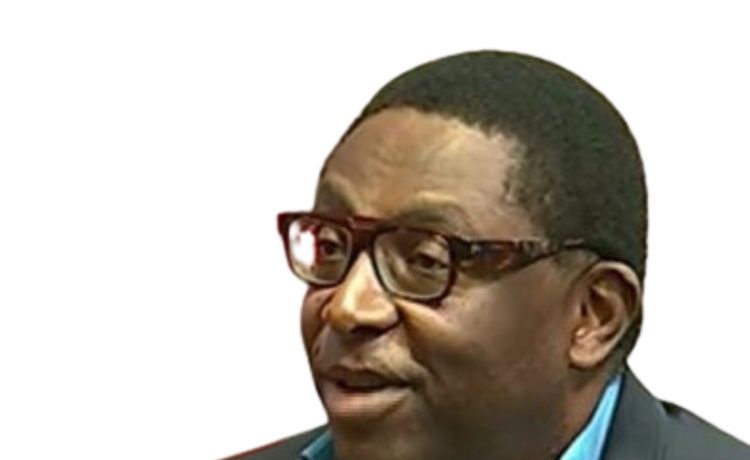
Speaking at an economic forum organized by the Finance Correspondents of Nigerian Association in Lagos, financial analyst and Chief Executive Officer of CFG Advisory, Tilewa Adebajo, highlighted what he described as a “dangerous fiscal imbalance” in the proposed 2026 budget.
According to him, the federal government allocated N15.52 trillion to debt servicing, an amount that exceeds the combined N11.41 trillion set aside for defence, security, education, and health—sectors widely regarded as critical to national development.
Budget Size and Key Allocations
President Bola Ahmed Tinubu presented the N58.18 trillion 2026 Appropriation Bill to a joint session of the National Assembly in December 2025, outlining the administration’s fiscal priorities for the year ahead. The government identified security, infrastructure, education, healthcare, and agricultural productivity as the core pillars of the budget.
Under the proposal, the government allocated N5.41 trillion to defence and security, N3.56 trillion to infrastructure, N3.52 trillion to education, and N2.48 trillion to healthcare. Analysts, however, argue that these allocations fall short of Nigeria’s development needs, especially when measured against the rising cost of public debt.
The government projected debt servicing at N15.52 trillion, while the budget deficit stands at N23.85 trillion, representing 4.28 percent of Gross Domestic Product. Over the next three years, cumulative deficits are expected to exceed N50 trillion, intensifying concerns over borrowing and fiscal discipline.
Why Debt Servicing Raises Alarm
Adebajo warned that the widening gap between debt obligations and social spending signals a serious policy risk. He stressed that security, education, and healthcare are deeply interconnected, and underfunding any of them weakens long-term economic performance.
“Without security, investment cannot thrive,” he said. “Without educated and healthy citizens, productivity will remain low, and growth will be unsustainable.”
He cautioned that Nigeria is edging toward a fiscal trap, where rising debt costs crowd out critical public investment. He also pointed to the government’s persistent difficulty in fully funding capital expenditure and its growing reliance on borrowing as threats to long-term economic stability.
Reforms at a Crossroads
Nigeria has now entered the third year of sweeping economic reforms, including fuel subsidy removal, exchange rate liberalisation, and fiscal consolidation. While the government introduced these measures to correct structural distortions, they have imposed significant short-term costs on households and businesses.
Adebajo said the economy has reached a critical turning point and argued that reforms alone can no longer deliver sustainable growth.
“The urgency of now is clear,” he said. “Nigeria must convert reform gains into productivity-led growth of 8 to 10 percent if it hopes to improve livelihoods and lift more than 140 million people out of multidimensional poverty.”
He warned, however, that reform fatigue is spreading, as citizens struggle with declining purchasing power, high inflation, elevated interest rates, and an unstable exchange rate.
Mixed Signals From Macroeconomic Indicators
Some macroeconomic indicators have shown modest improvement. By the final quarter of 2025, the economy showed signs of stabilisation after more than two years of adjustment. Inflationary pressures eased, and foreign exchange volatility declined compared with earlier reform periods.
Despite these gains, the economy has yet to deliver broad-based prosperity. Weak productivity, limited industrial output, and sluggish investment continue to constrain growth. Since the reforms began, the naira has lost more than 200 percent of its value, while total public debt has climbed above $100 billion, deepening concerns about sustainability.
Human Cost of Economic Adjustment
The reforms have taken a heavy social toll. Rising living costs, weak consumer demand, and limited access to credit continue to strain households and businesses. Small and medium-sized enterprises—often described as the backbone of the economy—have faced particular pressure from high interest rates and currency volatility.
Analysts say social intervention programmes designed to cushion the impact of the reforms have fallen short. Adebajo called on the government to redesign and strengthen these programmes to prevent economic stabilisation from eroding social cohesion.
“Now that the economy has achieved some stability, reforms must take on a human face,” he said.
The Need for a Coordinated Growth Strategy
Experts argue that Nigeria’s next phase of economic management must prioritise policy coordination, rather than isolated reforms. They say the government must align structural reforms with trade, industrial, and investment strategies, while ensuring that fiscal and monetary policies reinforce each other.
Adebajo warned that without such coordination, Nigeria risks remaining trapped in a low-growth, high-debt cycle. He urged the federal government to prioritise capital expenditure, cut wasteful spending, and improve revenue mobilisation without placing additional strain on citizens.
Looking Ahead
As lawmakers debate the 2026 Appropriation Bill, the rising cost of debt servicing will remain a central issue. Analysts warn that unless the government reins in deficits and redirects spending toward growth-enhancing sectors, Nigeria’s development ambitions could falter.
Ultimately, policymakers must do more than balance the books. They must ensure that fiscal decisions deliver tangible improvements in security, education, healthcare, and quality of life for Nigerians.