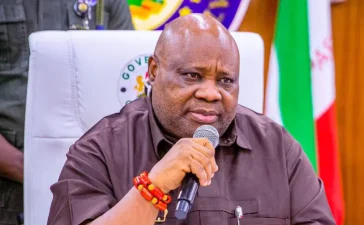
The Kano State Government has dismissed claims by elder statesman, Buba Galadima, that Governor Abba Kabir Yusuf cannot secure a second term without the backing of Senator Rabiu Musa Kwankwaso, describing the remarks as misleading and a poor reading of the state’s political history.
In a statement issued yesterday, the Commissioner for Information and Internal Affairs, Ibrahim Waiya, said the assertion undermines the democratic awareness of Kano people and falsely portrays the state as permanently trapped in political godfatherism.
Waiya acknowledged Senator Kwankwaso’s status as a major political figure in Kano and Nigeria but insisted that no individual holds permanent ownership of the state’s political destiny.
“Kano operates on its own historical rhythm, civic memory and political consciousness. Power in the state ultimately rests with the electorate, whose loyalty has always been conditional on performance, character, trust and credibility,” he said.
The commissioner made the remarks as Governor Yusuf formally defected from the New Nigeria Peoples Party (NNPP) to the All Progressives Congress (APC).
Waiya expressed surprise that the comments came from Galadima, noting that he benefited from Governor Yusuf’s inclusive leadership despite not being an indigene of Kano State.
According to him, Galadima was appointed chairman of the Governing Council of Kano State Polytechnic in good faith, based on expectations of experience and value addition.
However, Waiya said the tenure recorded little or no measurable impact, as no notable reforms or developmental initiatives were associated with Galadima’s leadership.
He stressed that leadership should be judged by tangible outcomes rather than public commentary, adding that Kano voters have historically resisted permanent political ownership.
The commissioner recalled the emergence of Malam Ibrahim Shekarau as governor in 2003 without godfather backing, attributing his rise and re-election to moral credibility and popular appeal.
He also referenced Senator Kwankwaso’s political comeback in 2011, noting that it was driven by his past performance in office rather than political anointment.
“Performance, not proximity to power, remains the enduring principle of Kano politics,” Waiya said.
He noted that Governor Yusuf came into office through a popular mandate, defended through due legal processes, and has since asserted himself as an independent governing authority.
According to him, the governor’s administration has focused on education, institutional reforms, social equity and the restoration of public trust.
“To frame the governor as standing on borrowed feet ignores the reality that governance is iterative. Political authority in Kano is consolidated through delivery, not inherited indefinitely through association,” he added.
Expressing confidence in Yusuf’s political future, Waiya said the governor would not only secure a second term but would also govern more effectively with growing experience.
He further explained that the governor’s recent political decisions were influenced by internal crises within the NNPP, including leadership disputes and ongoing court cases that weakened party cohesion.
“These decisions were taken in good faith, without ill will, and with a firm commitment to peace, unity and the progress of Kano State,” he said.
Waiya concluded by citing verses from the Qur’an and a Hadith of the Prophet Muhammad on reliance on Allah and divine decree, describing them as the “enduring grammar of Kano politics.”