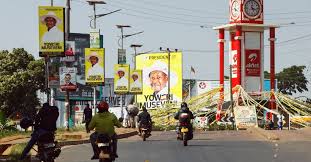
Ugandan authorities late on Saturday partially restored internet services after a days-long shutdown imposed ahead of elections that saw President Yoweri Museveni secure a controversial seventh term in office.
Users reported being able to reconnect to the internet around 11 p.m. local time (2000 GMT), while some internet service providers notified customers that services had resumed, excluding access to social media platforms.
Confirming the development, Airtel Uganda spokesperson David Birungi said the restoration was ordered by the state communications regulator to allow businesses reliant on the internet to resume operations. He added that social media platforms were instructed to remain inaccessible.
The state-run Uganda Communications Commission (UCC) said the shutdown was implemented to curb “misinformation, disinformation, electoral fraud and related risks.” However, opposition figures condemned the move, accusing the government of using the blackout to tighten control over the electoral process and ensure victory for the incumbent.
On Saturday, Uganda’s electoral body declared Museveni, 81, winner of Thursday’s presidential poll with 71.6 percent of the vote. His closest challenger, pop star-turned-politician Bobi Wine, garnered 24 percent.
A joint election observer mission from the African Union and other regional bodies criticised the conduct of the poll, particularly the involvement of the military and the decision to shut down the internet.
“The internet shutdown implemented two days before the elections limited access to information, freedom of association, curtailed economic activities, and created suspicion and mistrust in the electoral process,” the observers said in a report published on Saturday.
Museveni, who has been in power since 1986 and is Africa’s third longest-serving head of state, will extend his rule into a fifth decade. When his new term ends in 2031, he would have governed Uganda for nearly 50 years. He is widely believed to be grooming his son, Muhoozi Kainerugaba — the current head of the military — as a successor. Kainerugaba has openly expressed presidential ambitions.
Bobi Wine, who challenged Museveni for the second time, rejected the election results, alleging widespread fraud. Following the announcement, scattered protests erupted in parts of the country, according to a Reuters witness.
In Magere, a suburb of Kampala where Wine resides, youths reportedly burned tyres and erected road barricades, prompting police to fire tear gas. Police spokesperson Racheal Kawala said the protests had been contained and arrests made, adding that details of those detained would be released later.
Wine’s whereabouts were unknown early Sunday after he claimed on social media platform X that he escaped a military raid on his home. Sources close to him told Reuters he was at an undisclosed location within Uganda. He was briefly placed under house arrest following the 2021 elections.
Wine has also alleged that hundreds of his supporters were detained in the months leading up to the vote, with some subjected to torture. The government has denied the allegations, maintaining that all arrests were lawful and that detainees would be treated in line with due process.