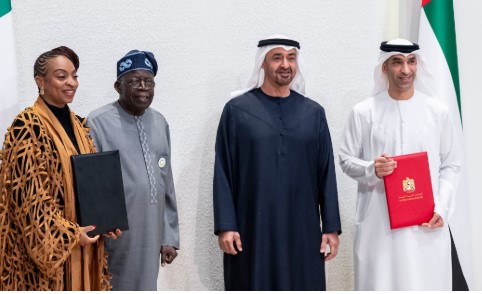
Nigeria is strengthening its economic ties with the United Arab Emirates (UAE) through a wide-ranging trade agreement aimed at expanding bilateral commerce, lowering trade barriers, and attracting fresh foreign investment.
Under the terms of the deal, the UAE will remove tariffs on more than 7,000 product categories exported from Nigeria, while Nigeria has committed to gradually lifting duties on approximately 6,000 UAE-origin goods over a five-year transition period. Policymakers say the phased approach is designed to protect sensitive domestic industries while allowing time for local producers to adjust to increased competition.
The agreement marks a significant step in Nigeria’s broader trade and investment strategy under President Bola Tinubu, who has prioritised diversifying economic partnerships beyond traditional Western markets. Abuja is increasingly looking toward Asia and the Middle East to support growth, infrastructure development, and industrial expansion.
Strategic Shift in Trade Policy
Government officials describe the pact as part of a deliberate policy shift to position Nigeria as a more competitive and open economy. By lowering tariffs and improving market access, the administration hopes to stimulate non-oil exports, attract capital inflows, and strengthen Nigeria’s role within global and regional value chains.
The deal also aligns with Nigeria’s wider economic reform agenda, which includes improving the business environment, stabilising foreign exchange markets, and restoring investor confidence following recent macroeconomic adjustments.
UAE Expands Its Footprint in Africa
For the UAE, the agreement reinforces its rapidly growing economic presence across Africa. Emirati companies have invested an estimated $110 billion in African projects over the past five years, spanning sectors such as ports, logistics, energy, aviation, and real estate.
Nigeria, as Africa’s largest economy and most populous country, represents a strategic partner in that expansion. Analysts note that tariff reductions could encourage greater Emirati investment in manufacturing, infrastructure, agribusiness, and services within Nigeria.
Resetting Bilateral Relations
The trade pact also signals a broader reset in Nigeria–UAE relations following recent diplomatic and commercial tensions. The return of Emirates Airlines to Lagos after a prolonged suspension is widely seen as a confidence-building measure and a sign of renewed cooperation.
Officials say improved air connectivity will support trade flows, tourism, and business travel, reinforcing the economic objectives of the agreement.
Policy Implications and Next Steps
Trade experts caution that effective implementation will be critical. Nigeria’s ability to fully benefit from the deal will depend on export readiness, regulatory clarity, and infrastructure capacity. Ensuring that local industries remain competitive while opening markets will be a key policy challenge over the next five years.
Nevertheless, the agreement underscores Nigeria’s intent to reposition itself as an attractive destination for global capital and a stronger participant in international trade. As negotiations move toward implementation, the deal is expected to play a central role in shaping Nigeria’s economic engagement with the Middle East.