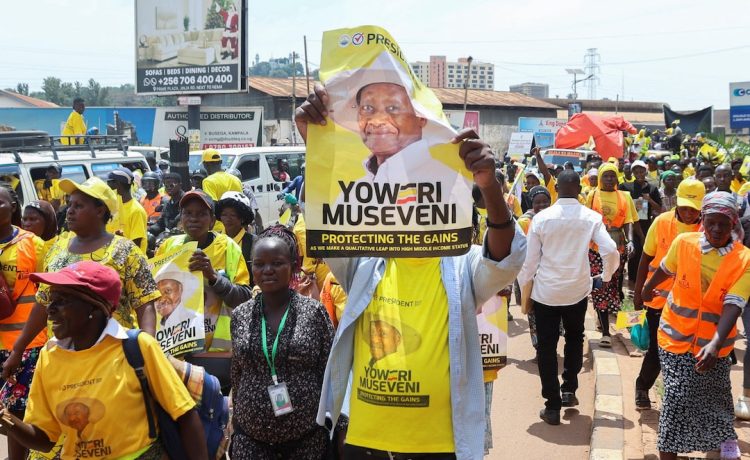
Uganda has imposed a nationwide Internet shutdown just days before its general elections, cutting off public access to online services across the country.
The blackout began at about 6:00 PM local time on Monday, following directives to all major Internet service providers and mobile network operators to suspend public Internet access. The shutdown comes two days before Ugandans head to the polls on January 15.
Authorities said the move is aimed at curbing the spread of misinformation and preventing election-related violence. However, the decision has effectively taken the country offline at a critical political moment.
With the shutdown in place, access to social media platforms, messaging apps, email services, web browsing, streaming platforms, and even mobile virtual private networks (VPNs) has been blocked. For millions of Ugandans, this has cut off key channels used to follow real-time election updates, report irregularities, coordinate election observers, and verify political claims.
This is not the first time Uganda has enforced such measures. Similar Internet shutdowns were implemented during the 2016 and 2021 elections. This time, the government has expanded the restrictions by halting new SIM card sales and blocking outbound data roaming to neighbouring countries such as Kenya and Tanzania, closing off a common workaround used by residents in border areas.
Despite the broad blackout, essential services have been allowed to remain online. Hospitals, banks, ATMs, power infrastructure, government platforms, and election commission systems are operating through whitelisted IP addresses, private VPNs, or dedicated connections.
Telecommunications operators have reportedly been warned that failure to comply with the directive could result in heavy fines or the revocation of operating licences. Providers are also required to report any technical “incidents” within 30 minutes.
Across Africa, Internet shutdowns during election periods have become increasingly common, often justified on security grounds. Critics argue that while such measures restrict communication and limit mobilisation, they do little to stop misinformation and instead make it harder for citizens to verify facts, document events, and hold authorities accountable.
As Uganda enters a crucial electoral period, the Internet blackout has reignited debates over digital rights, freedom of expression, and the role of connectivity in democratic processes.