It was a moment straight out of a blockbuster script—charged with suspense, emotion, and anticipation—as former Director General of the National Council for Arts and Culture (NCAC), Otunba Segun Runsewe, mounted the podium at the Nigeria Tourism Investment Forum and Exhibition (NTIFE) 2025 in Abuja.
The event, hosted by the Federation of Tourism Associations of Nigeria (FTAN), marked Runsewe’s first major tourism appearance in the Federal Capital Territory since his removal from office on January 12, 2024, during a restructuring of agencies under the Federal Ministry of Arts, Culture, Tourism and Creative Economy.
Adding to the intensity of the day was the presence of the Minister of Arts, Culture, Tourism and Creative Economy, Barrister Hannatu Musawa—under whose leadership Runsewe exited office. This was the first time both figures would share the same stage in nearly a year, placing the entire room on edge as industry stakeholders anticipated how the long-awaited reunion would unfold.
When called to speak, Runsewe instantly settled into his trademark style—energetic, insightful, and authoritative. He delivered a sweeping assessment of global cultural tourism trends, supported by extensive data and analysis reminiscent of his leadership years at NCAC and NTDC (now NTDA).
He lamented Nigeria’s absence from Africa’s top 10 tourism performers in the latest global report, which recorded over 1.1 billion international arrivals between January and September 2025, noting that countries like The Gambia, South Africa, Kenya, and several North African nations drove the continent’s growth.
Runsewe commended FTAN President, Dr. Aliyu Badaki, for his visionary leadership and urged the Federation to prioritise its Tourism Transformation Mandate. He also praised keynote speaker Babajide Kolade-Otitoju, describing him as cerebral, engaging, and exceptionally knowledgeable.
Addressing government representatives and the Minister directly, he called for a strategic recalibration of Nigeria’s tourism sector, recommending the adoption of a SWOT analysis framework to reposition the country as a competitive global destination.
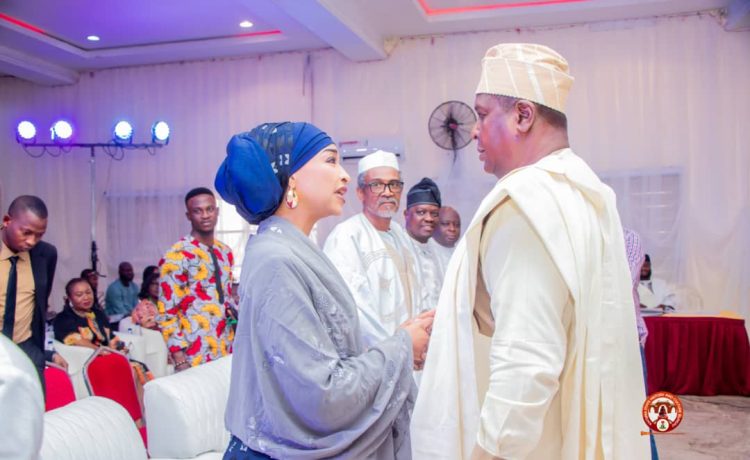
His presentation ended in a roaring, sustained applause. As he returned to his seat, Runsewe and Musawa exchanged warm pleasantries—an unexpected yet heartwarming moment that immediately drew a standing ovation from the audience.
In her remarks, Minister Musawa took the reconciliation further by publicly acknowledging Runsewe’s tremendous contributions to Nigeria’s cultural tourism landscape. She described his impact as “indelible” and assured the audience that his recommendations would be carefully considered as part of the ministry’s urgent effort to analyze and transform the sector’s strengths, weaknesses, and growth opportunities.